Unveiling Key Insights: Plastics Pollution Treaty INC-2 Unearths Progress, Member States' Voices, and Stakeholders' Perspectives
INC-2 faced challenges in electing the bureau and approving the draft rules of procedure, with tensions arising from conflicts in Ukraine and concerns about voting versus consensus-based decision-making. Procedural debates and delays caused further stress and hindered progress. Still, a compromise was eventually reached on the provisional application of the rules of procedure and the possibility of voting on substantive matters.
______________________________________________________________
3 Things To Know About INC-2
1. Several contact groups were formed to discuss objectives, substantive obligations, means of implementation, and other measures of the future agreement. Early differences emerged between countries regarding bottom-up versus global commitments.
2. The meeting in Paris faced procedural issues, particularly regarding the adoption of rules of procedure, followed by disagreements on whether voting or consensus should be used in decision-making. Access to the meeting was a concern, as some groups could not attend or access the building due to limited badges, while there was a notable industry presence in the talks. Despite these problems, INC-2 made progress towards agreeing on a mandate for a "zero draft" of the treaty.
3. After days of delays, the meeting finally turned to plastics. Contact groups broke off and addressed core obligations, control measures, and means of implementation. The issue of financing, including the proposal for a dedicated multilateral fund, sparked discussions between donors and developing countries. Limited time prevented in-depth negotiations, creating a lack of substantive position-setting during the meeting.
Member State Representatives Across 6 Continents
At the Global Treaty Dialogues for Plastics Pollution - an informal multi-stakeholder forum in conjunction with the UN Plastics Treaty by OPLN - representatives and key negotiators the world over met with their peers and presented their contributions to INC-2. This far-reaching conversation brought together experts to discuss the core elements of the ILBI, the nature of each Member States obligations, and the means of implementation for treaty-related activities.
United Kingdom
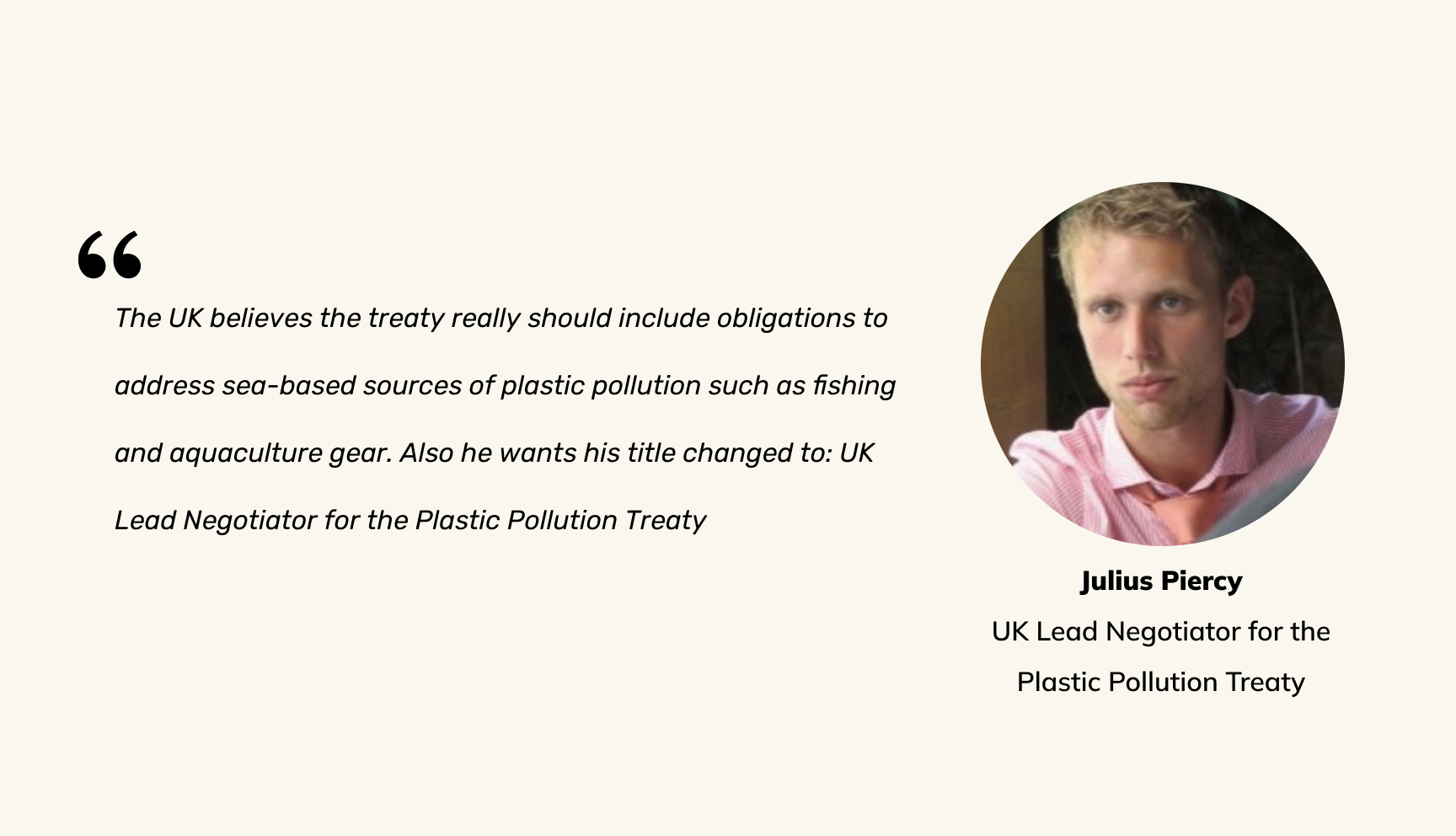
Piercy highlighted vital points of the United Kingdom’s submission to the INC, including a call for parties to adopt legally binding targets to restrain plastic production and consumption. He added that to move to a circular economy faster, “We need to start with the quickest wins, including global bans and restrictions on sort of specific avoidable plastic items, unintentionally added microplastics, as well as some plastic polymers, chemicals, and additives that could be hazardous or really difficult to recycle.”
Piercy also spoke on the inclusion of waste pickers in the plastics treaty, arguing in support of a just transition for these workers that addressed poverty and gender inequality. The UK negotiator suggested that the informal waste sector should be recognized as a critical stakeholder in tackling plastic pollution and integrated into formal waste management schemes.
United States
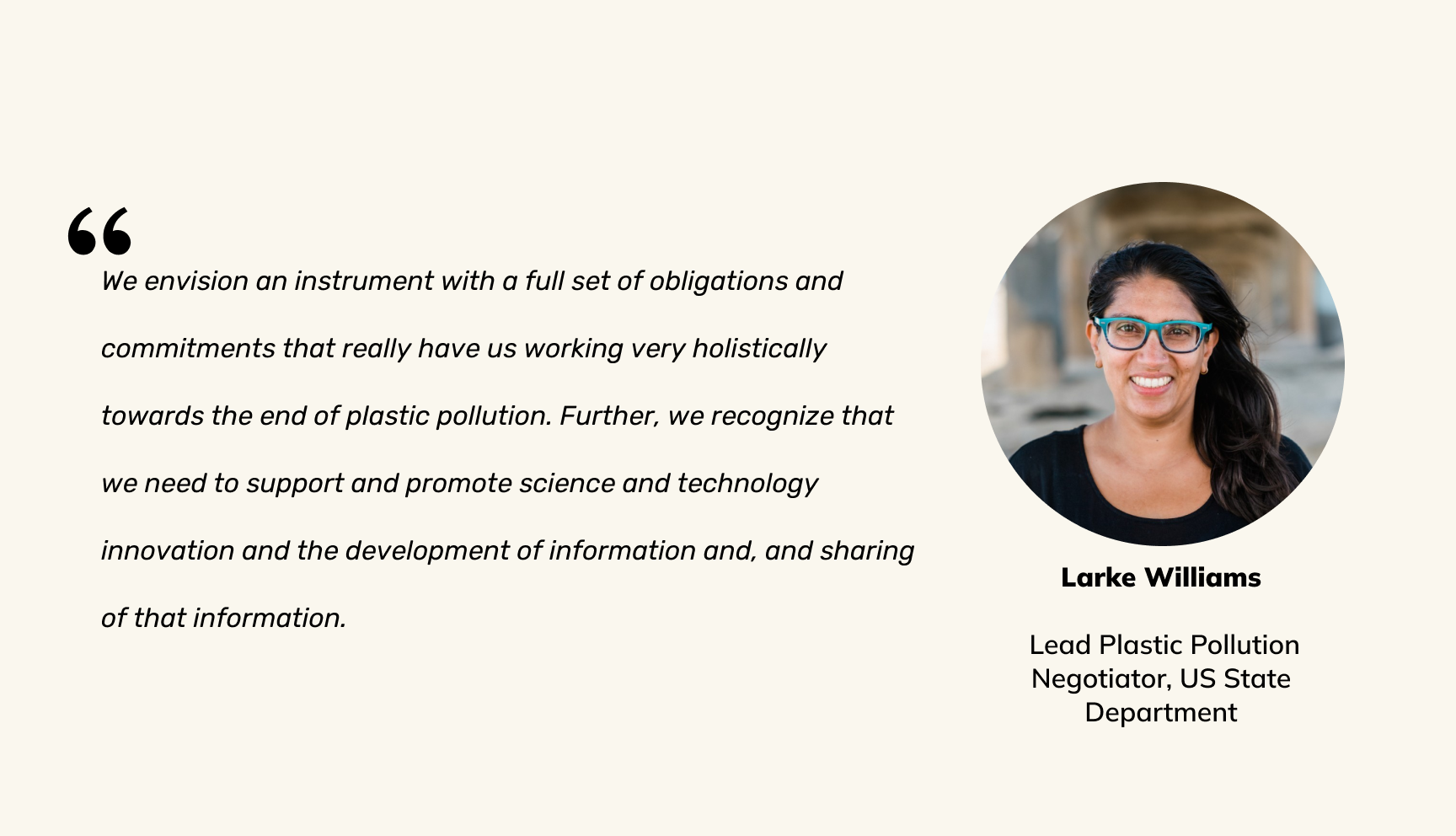
Among other key movers, Williams foregrounded the importance of strengthening existing systems to help in the treaty process. This is in line with the substantive roadmap for the treaty that came from UNEA 5.2: aiming to foster coordination among existing international environmental treaties to “prevent plastic pollution and its related risks to human health and adverse effects on human well-being and the environment.
Williams spoke of the importance of a global goal for plastic pollution reductions, noting the ambition of many Member states and stakeholders to end plastic pollution by 2040. “We [the US State Department] think 2040 is a good place to aim for.”
As for substantive matters, Williams supported a treaty that worked towards sustainable production and consumption and strengthened the environmentally sound management of plastic waste.
African Group
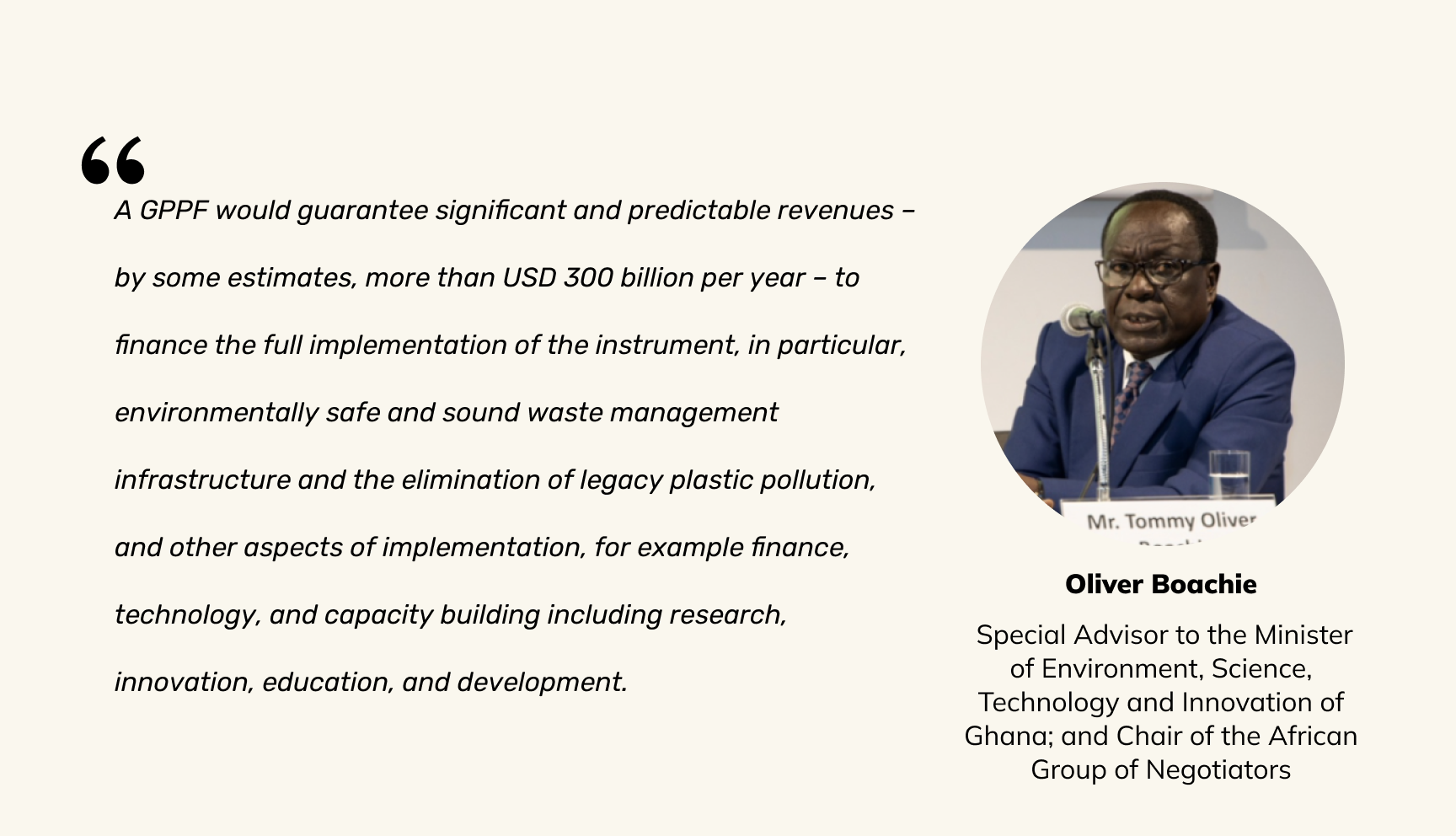
Boachie spoke on the entire African Group’s submission to the INC, as well as Ghana’s specific submission. In their document, the African Group agreed that plastic production and consumption volumes need to be reduced and recognized the need to set target dates for eliminating toxic chemicals from the plastic system. There was further alignment around transparency about the lifecycle of plastics, including a scientific basis for making decisions such as determining the toxicity of chemical additives.
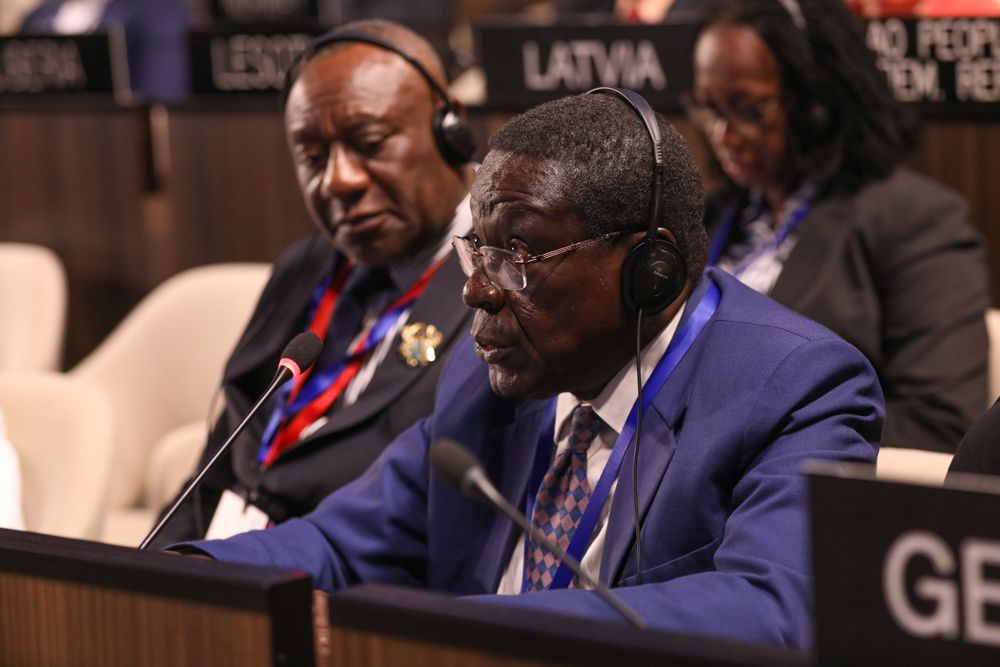
Moving on to Ghana’s submission, Boachie therein proposed a global plastic pollution fee (GPPF) to raise resources for waste management facilities in member countries. Boachie argued this fee was a way to operationalize the often-referenced “polluter pays principle” under the treaty framework.
AOSIS
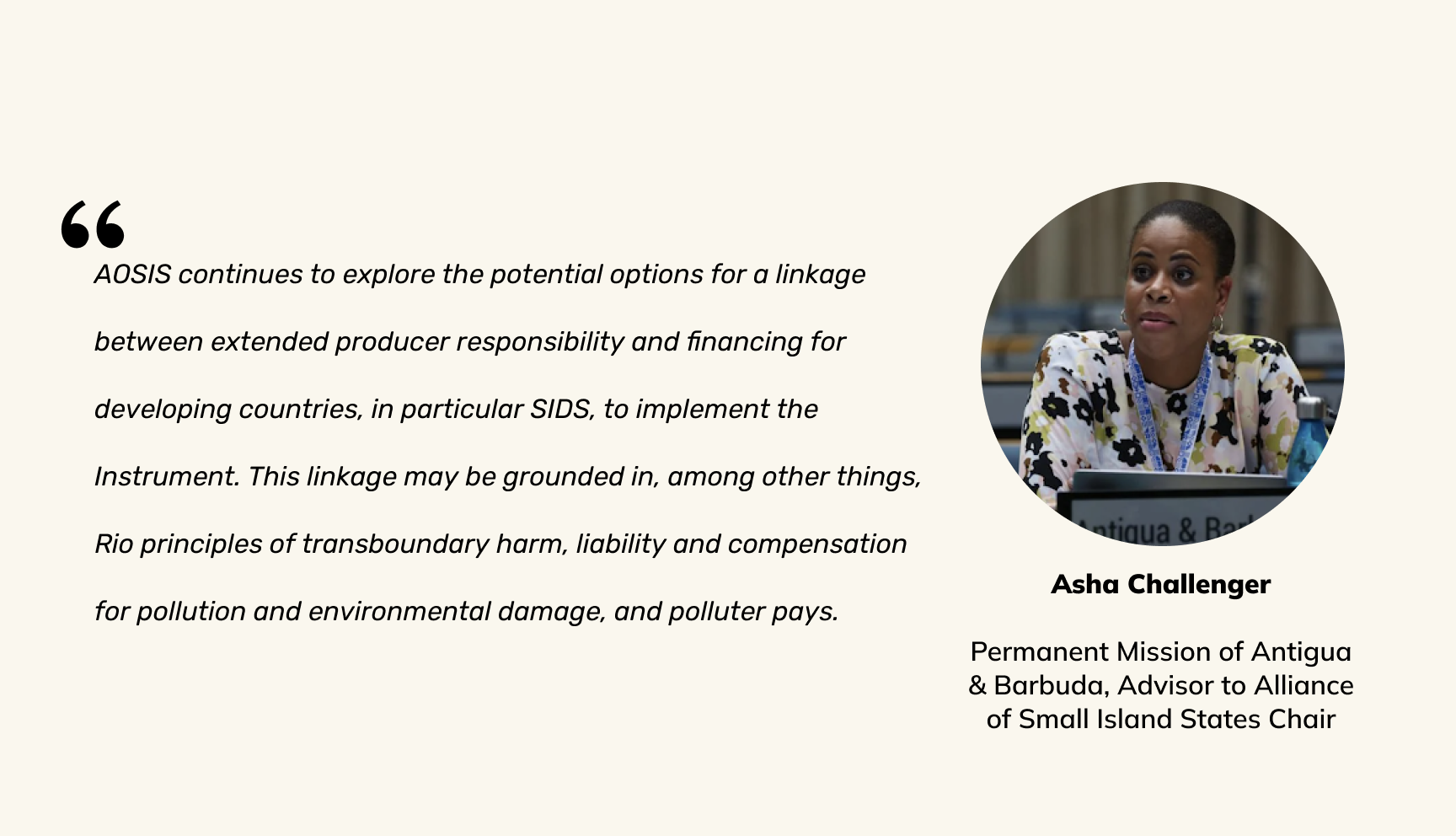
Challenger spoke of a matching commitment to both national and global collaboration, emphasizing the importance of strong nationally determined targets, ambitious global collective action, and non-state actor action. She argued that annexes should support these actions, allowing for flexibility to adjust ambitions based on new knowledge.
Per IISD, Earth Negotiations Bulletin, if this annex strategy were adopted, negotiators would need to decide on the content to be included in such annexes, which could include but is not limited to:
- supplementary technical information
- substantive provisions
- supplementary, or “umbrella” agreements
Challenger agreed with Boachie and other representatives that adequate and predictable means of implementation are crucial, particularly for developing countries and small island developing states (SIDS). She called for discussions on financing to be started ASAP. The Alliance of Small Island States’s (AOSIS’s) submission previewed how this financing mechanism may be tied to EPR.
Gonzalo Guaiqui, Chile
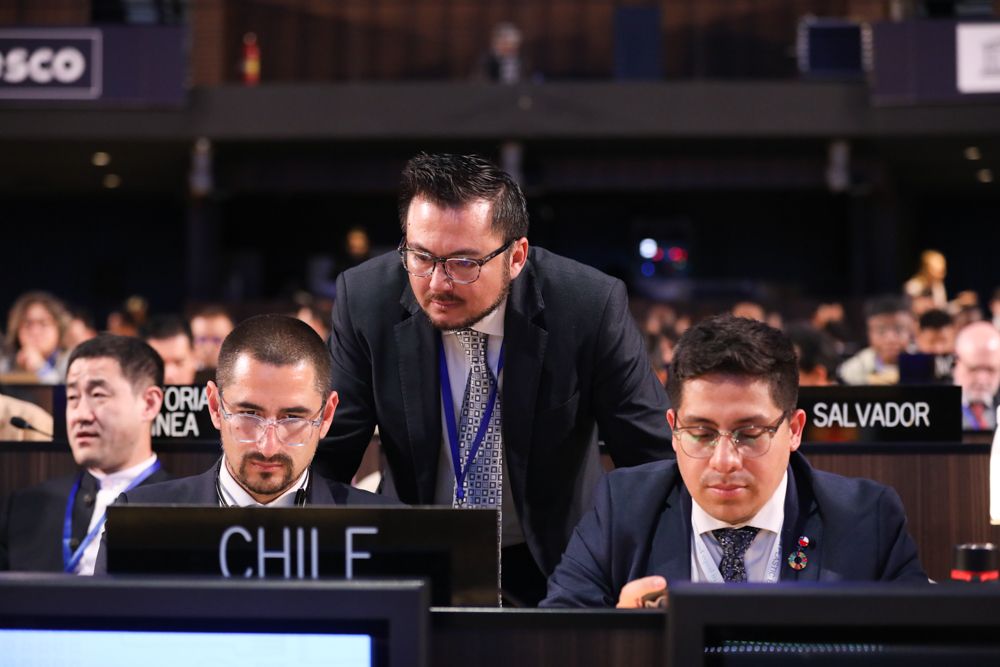
Guaiqui started by acknowledging that the INC process is entering a more detailed and dynamic phase towards a future agreement. He used the time to highlight the need for technical and political work to address challenges and emphasize the importance of integrating science and policy.
Key principles for the treaty: Guaiqui advocated for a treaty that set goals for reducing single-use plastics, promoting sustainable alternatives, improving waste management systems, and addressing issues like microplastics and microfibers.Crucially, Guaqui and Chile supported the precautionary principle, meaning that a body or government may take measures to prevent possible harmful effects of plastics, even if definitive proof of damage has not yet been identified.
Further, Chile’s representative stressed the importance of providing support and assistance to developing countries, particularly in building waste management infrastructure, scaling recycling technologies, and raising public awareness. He expressed Chile's commitment to attend the upcoming INC-3 in Nairobi and work constructively with all delegations.
Dennis Claire, Federated States of Micronesia
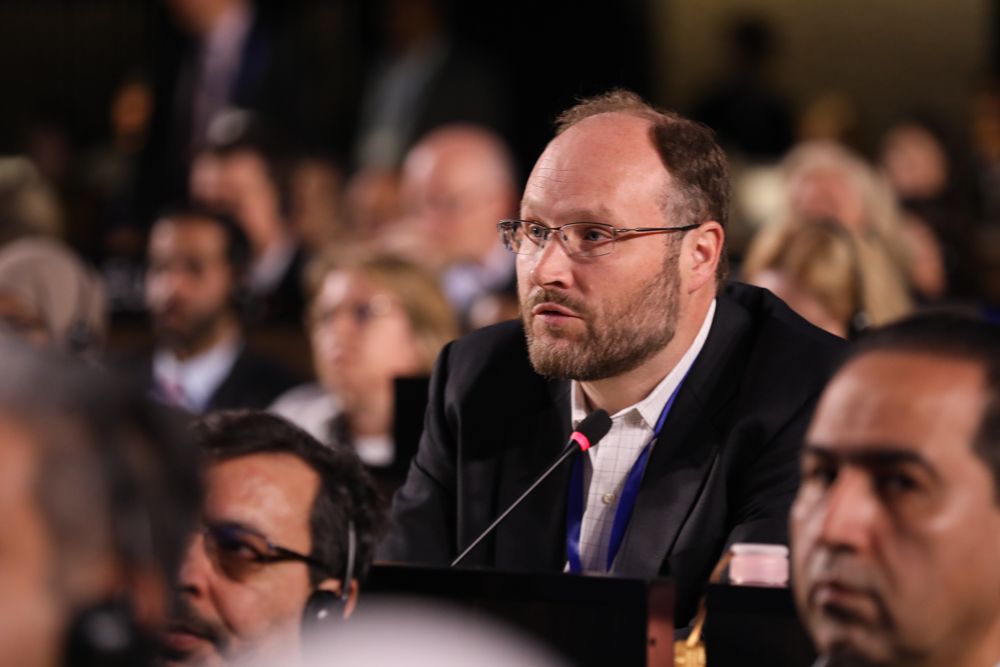
Claire began by providing background information about Micronesia’s involvement in the ozone negotiations of the past decades under the Montreal Protocol, widely considered one of the most successful international treaties in history. Claire expressed Micronesia’s interest in applying a similar approach to addressing the environmental issues caused by plastics at different stages of their lifecycle.
Micronesia’s submission to INC-2 focused on funding for this and other plastics-related work, collaborating with six other countries to propose a financial mechanism during the conference. Dennis promoted the creation of a multilateral fund for the ILBI, governed and replenished like the Montreal Protocol’s funding structure. The latter not only supported the actions of developing countries to phase down CFCs but “sent timely signals to the market to drive the development and commercialization of cost-effective, environmentally friendly alternatives to the substances regulated,” said Claire. Claire also suggested that actions not covered under the core mechanism could be supported by external funds like the Global Environment Facility (GEF).
Wassiana Trésor Avomo Ondo, Gabon
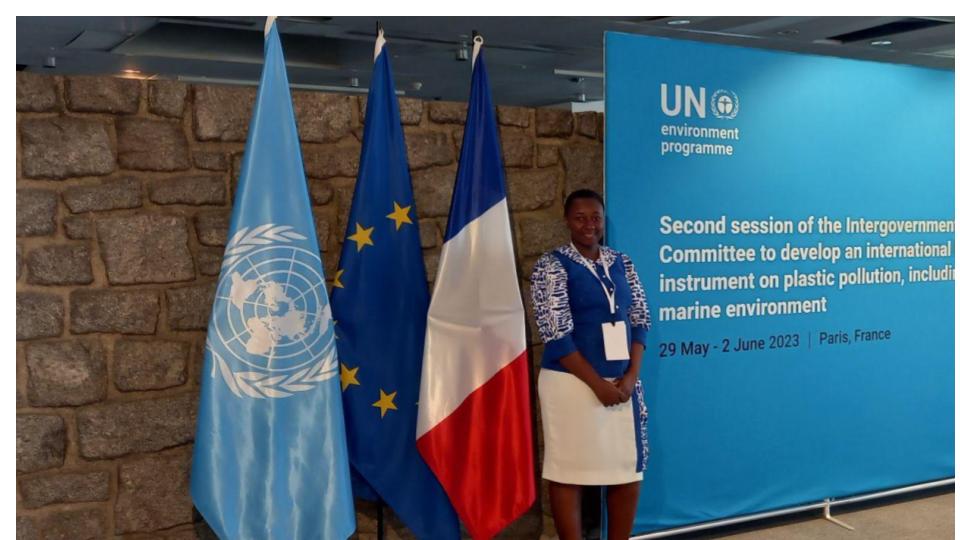
Gabon’s representatives recapitulated their submission to INC-2, based on the following main points. It was their position that the ILBI should include:
- An objective aligned with UNEA Resolution 5/14, which aims to protect human health,biodiversity and climate systems from plastic pollution by intervening throughout the production cycle;
- The definition of general principles, including extended producer responsibility, non-regression and chemical simplification, which must be applied in addition to the usual principles of precaution, prevention, etc.
- Fundamental obligations that call for global constraints on source reduction and the facilitation of circularity.
And implementation measures that include a combination of monitoring mechanisms at global level, relayed at regional and local levels, and effective and viable cooperation and financing measures.
Mohd Ridhuan Bin Ismail, Malaysia
Representing Malaysia, Ismail highlighted the need to differentiate between different types of plastic in the treaty context, reducing unnecessary and problematic plastics while exploring sustainable alternatives. He added that the treaty should ensure reasonable transition timelines and harmonize monitoring and assessment processes. Ismail especially highlighted concerns with microplastics and microfibers, which “pose significant threats to ecosystems and also to human health.”
“For that problem,” he added, “we think that the circular economy approach is a way to manage the plastics.”
As for means of implementation, the representative echoed several other speakers in calling for timely and adequate financial and technical assistance, as well as capacity support for meaningful participation of countries with limited resources.
___________________________________________________________________
Multi-Sector Stakeholder Contributions
Antaya March - Global Plastic Policy Centre
March, the research lead at the Global Plastics Policy Centre, discussed the importance of understanding policy effectiveness in tackling plastic pollution. To address the need for more reliable frameworks for evaluating policy, the GPPC has developed an analytical framework for plastic policy based on existing evidence and large data sets.
The framework consists of reference statements that assess the performance of policies and factors contributing to their design. By scoring each reference statement, the Centre can determine the strength of evidence and the overall effectiveness of policies. Their recent analysis revealed a significant lack of monitoring and evaluation in the plastic policy landscape, with many policies lacking sufficient evidence to draw reasonable conclusions.
The centre's findings are available online, and accessible to the public, research community, businesses, and policymakers. Additionally, the Centre supports the Global Plastics Treaty by continuously updating its findings, conducting targeted policy analyses, and producing evidence-based policy briefs on relevant topics. Recent research identified six key enablers for national action plans, including legal binding, stringent compliance measures, robust monitoring and evaluation, regular revisions, dedicated funding, and alignment with the goals put forth in UNEA Resolution 5/14.
Charles Goddard - Editorial Director at Economist Impact
Goddard outlined sobering insights from a 2023 report titled Peak Plastics: Bending the Consumption Curve. The report was released as part of the Back to Blue program with the Nippon Foundation. It modelled the potential impact of three policy approaches to reduce plastic use: a phased ban on problematic single-use plastics, a mandatory extended producer responsibility regime, and an environmental tax on virgin plastic production.
Goddard revealed that the model's baseline forecast predicted plastic consumption would nearly double, from 261 million tons in 2019 to 450 million tons in 2050 if no policy interventions were agreed upon. The findings revealed no modelled policy interventions could lead to peak plastic consumption by 2050. The most effective measure was the global ban on problematic, unnecessary single-use plastics, but even this approach would still see plastic consumption increase by about 1.5 times by 2050 compared to the 2019 baseline.
Further analyses showed that combining all three policy approaches would only marginally slow the growth of plastic consumption to about 1.25 times the baseline scenario. Goddard concluded that only the most ambitious policies under consideration by treaty negotiations were likely to make a meaningful impact on plastic waste, emphasizing the daunting scale of the challenge that lay ahead.
Alisson Lin - Global VP Packaging Sustainability, Mars Inc.
Allison Lin discussed her role in driving sustainability initiatives in packaging, drawing on her previous experience in leading sustainability and market development at various brand owners such as P&G, Starbucks, and Coca-Cola. She emphasized the need for more harmonized regulation in the industry to accelerate voluntary initiatives and reduce complexity and risk. Lin, who represented Mars as well as the Business Coalition for a Global Plastic Treaty, expounded on the reasoning behind the BCGPT's submission to the INC-2, which encouraged a treaty with ambitious and effective global regulations.
In the Coalition’s view, the treaty should provide clarity and certainty for businesses, enabling them to plan and accelerate their investments in sustainable packaging. Lin focused on three key movers toward this clarity: reduction of problematic materials, appropriate circulation of necessary plastics, and prevention and remediation of legacy waste, especially microplastics.
Lin also highlighted the importance of a just transition and the involvement of NGOs and financial institutions in funding mechanisms and value chain planning. She encouraged more companies to join the business coalition and have their voices heard in shaping the ILBI, as well as the continued participation of stakeholder groups across the plastic system.
Narain M. Ashta - ETH Zurich and Empa - Swiss Federal Laboratories for Materials Science and Technology, Switzerland
Ashta drew on their contribution to a UNEP report on Chemicals in Plastics published in the INC process. The report identified specific chemicals of concern, their sectors of use, health effects, and the need for improved risk assessments.
2 Key Findings:
- Ten groups of chemicals (based on chemistry, uses, or sources) are identified as being of major concern due to their high toxicity and potential to migrate or be released from plastics, including specific flame retardants, certain UV stabilizers, per- and poly-fluoroalkyl substances (PFASs), phthalates, bisphenols, alkylphenols and alkylphenol ethoxylates, biocides, certain metals and metalloids, polycyclic aromatic hydrocarbons, and many other non-intentionally added substances (NIAS).
- Chemicals of concern have been found in plastics across a wide range of sectors and products value chains, including toys and other children's products, packaging (including food contact materials), electrical and electronic equipment, vehicles, synthetic textiles and related materials, furniture, building materials, medical devices, personal care and household products, and agriculture, aquaculture and fisheries.
Ashta stressed the need for information on the chemicals used in products to be transparent along the supply chain, including to waste managers who handle chemical mixtures. Furthermore, they suggested reducing chemical complexity and referred to the harmonized list of additives used in the PET bottles industry as a potential model for other polymer types.
Hannah Pragnell-Raasch - Project Specialist, Global Ghost Gear Initiative
Hannah Pragnell-Raasch, the Project Specialist from the Global Ghost Gear Initiative, spoke on abandoned, lost, or otherwise discarded fishing gear (ALDFG) within the context of marine plastic pollution. Pragnell-Raasch highlighted the need for evidence-based approaches, the acknowledgement of best practices, and policy research to prevent and remediate the effects of ALDFG on wild capture fisheries and aquaculture systems.
Pragnell-Raasch discussed the findings of the 22 report on good practices to prevent and reduce marine plastic litter from fishing activities It included recommendations for voluntary and mandatory measures to address ALDFG and called for its specific recognition within the ILBI framework, all tying back to GGGI’s three main work categories:
- prevention: avoiding the occurrence of ALDFG in the environment
- mitigation: reducing the impact of ALDFG in the environment
- remediation: removing ALDFG from the environment.
Finally, Pragnell-Raasch emphasized the need for coordinated efforts during the intercessional period and ongoing dialogue with member states to ensure the inclusion of ALDFG-targeted measures in the zero draft of the ILBI. The speaker expressed appreciation for the support from various countries, including Chile, in prioritizing the marine environment in discussions on plastic pollution.
Jo Banner - Co-Founder and Co-Director, The Descendants Project
Jo Banner, a member of a fenceline community in Louisiana, expressed gratitude for the opportunity to participate in the treaty talks. She emphasized the importance of bringing the voice from the frontline to the negotiations. Banner stated the current standards of the plastic system fail to address the most urgent needs of communities that live near production sites.
Banner shed light on the environmental and health impacts faced by her community in Louisiana, particularly in the region known as Cancer Alley. She connected the historical context of plantations and petrochemical industries, explaining that many petrochemical plants now occupy former plantation grounds. Descendants of enslaved peoples who were settled in areas known as Free Towns now find themselves living near these facilities.
Banner emphasized the significant role of Louisiana's ports, many of which are major export hubs of petrochemicals. She presented data showing high cancer risks and double the national average of cancer cases in these communities, and called for transparency regarding chemical emissions. Finally, she argued against relying solely on recycling as a solution and called for reduced plastic production, non-plastic alternatives, and greater community engagement in finding solutions that prioritize environmental justice.
What’s Next for the UN Plastics Treaty?
On the final day of INC-2, an informal group had to be convened to address the details of the inter-sessional period to prepare for INC-3. Delegates decided to mandate the Secretariat to prepare a committee-driven zero-draft document to reflect differing views on various elements associated with the plastic lifecycle.
The delegates also requested the Secretariat to prepare a synthesis report of elements not discussed at INC-2, to be discussed in a one-day, pre-meeting event at INC-3. It was further decided the next INC meeting will occur at the UNEP HQ in Nairobi, Kenya in November 2023 (INC-3).
The Secretariat invites written submissions from observer organizations (deadline 15 August 2023) and Members of the Committee (deadline 15 September 2023) with more information available here.
SAP and Accenture are proud to be Supporting Partners of the Global Treaty Dialogue Program 2023
SAP and Accenture share a commitment to a sustainable future. Through technology and human ingenuity, we are committed to delivering the digital solutions and innovations needed to enable the goals of this treaty at scale. SAP is a long-term partner to the Ocean Plastics Leadership Network and has greatly benefited from learning, collaborating, and co-innovating on ideas within the Network. In partnership with Accenture, our combined approach to developing technical solutions to advance the circular economy also focuses on ensuring businesses are ready to take on the challenges and opportunities that such a landmark treaty will represent.
About The Forum
The Global Treaty Digest INC-2 is designed as an interactive, carbon-neutral convening and capacity-building program developed in collaboration with the UN Plastics Treaty International Negotiating Committee (INC) schedule. Our mission for this program is threefold:
- Serve as an informal public forum for multi-stakeholder capacity building and knowledge sharing: We believe in the power of collaboration and aim to foster interaction and knowledge sharing among member states, value-chain actors, civil society, and underrepresented groups, including the informal waste sector. This forum will enable participants to better prepare for the technical discussions at the upcoming INC.
- Promote science, innovation, and data infusion into the UN Plastic Treaty process: We recognize the importance of scientific advancements, innovation, and data-driven approaches in addressing the challenges posed by plastic pollution. Through the Global Treaty Digest INC-2, we aim to highlight and explore these crucial aspects.
- Report on the UN Plastic Treaty's evolution: Our event will provide a platform to discuss and report on the evolving nature of the UN Plastic Treaty throughout the INC process. We believe in the power of transparency and aim to keep all participants informed about the latest developments.